
Curb Appeal vs. Structural Protection: The Real Value of Exterior Cleaning
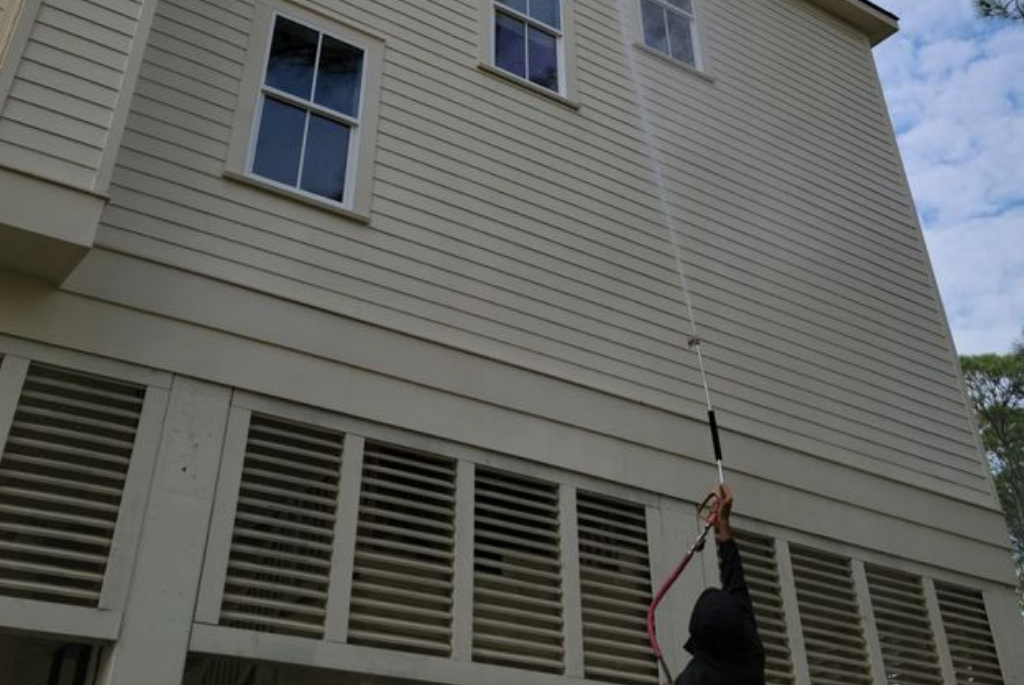
Coastal properties collect roof runoff, algae staining, salt residue, mildew, and drainage discoloration throughout the year. Exterior buildup usually appears first around rooflines, gutters, siding joints, shaded concrete, and entry areas with limited airflow.
Exterior cleaning improves curb appeal while removing organic residue and surface buildup that shorten the lifespan of exterior materials.
Exterior Appearance Still Affects Property Perception
Roof streaking, mildew-stained siding, discolored concrete, and visible runoff marks immediately affect how a property looks from the street.
For residential properties, exterior appearance affects how well the property looks maintained. Commercial properties face similar visibility issues across storefronts, sidewalks, entryways, and customer-facing exterior areas.
Routine exterior cleaning improves property appearance and removes buildup that accelerates exterior wear.
Exterior Materials Wear Differently
Roofs often develop algae streaking around shaded sections and water runoff areas. Painted siding commonly develops mildew and oxidation around trim lines and lower wall sections.
Concrete surfaces collect dirt, algae, and drainage staining around walkways, patios, and driveways. Wood fencing and trim absorb moisture faster than harder exterior materials, which increases wear across painted and finished surfaces.
According to the Environmental Protection Agency’s mold and moisture guidance, untreated moisture and organic growth contribute to ongoing exterior surface damage.
Cleaning Methods Affect Surface Performance
High pressure can damage shingles, painted siding, wood trim, and exterior finishes when used incorrectly. Softer materials require lower-pressure cleaning methods to avoid surface damage.
For example, soft washing services are commonly used for:
- Roofing systems
- Painted siding
- Stucco surfaces
- Vinyl siding
- Exterior trim and fencing
Higher-pressure washing is generally used for harder surfaces such as:
- Driveways
- Sidewalks
- Retaining walls
- Patios
- Parking surfaces
The wrong cleaning method can shorten the lifespan of exterior finishes instead of protecting them.
Maintenance Frequency Affects Exterior Condition
Properties with heavy shade, nearby trees, poor drainage, or constant moisture exposure require more frequent exterior cleaning.
Rooflines beneath trees collect runoff staining faster than sections exposed to direct sunlight. Siding near landscaping and irrigation systems also stays damp longer, especially around lower wall sections and trim.
Regular cleaning prevents visible staining from settling deeper into exterior surfaces.
For commercial properties, consistent exterior maintenance keeps storefronts, sidewalks, entryways, and shared spaces cleaner throughout the year.
Exterior Cleaning Protects Exterior Materials
Roof staining, algae growth, drainage marks, and surface residue all affect how exterior materials perform and age across coastal properties.
Using the correct cleaning method at the right intervals helps maintain roofing, siding, concrete, painted finishes, and wood surfaces before buildup becomes harder to remove or more expensive to correct.
For residential and commercial properties, exterior cleaning remains part of maintaining the condition, appearance, and lifespan of the property itself.