
How Often Should Different Exterior Surfaces Be Cleaned?
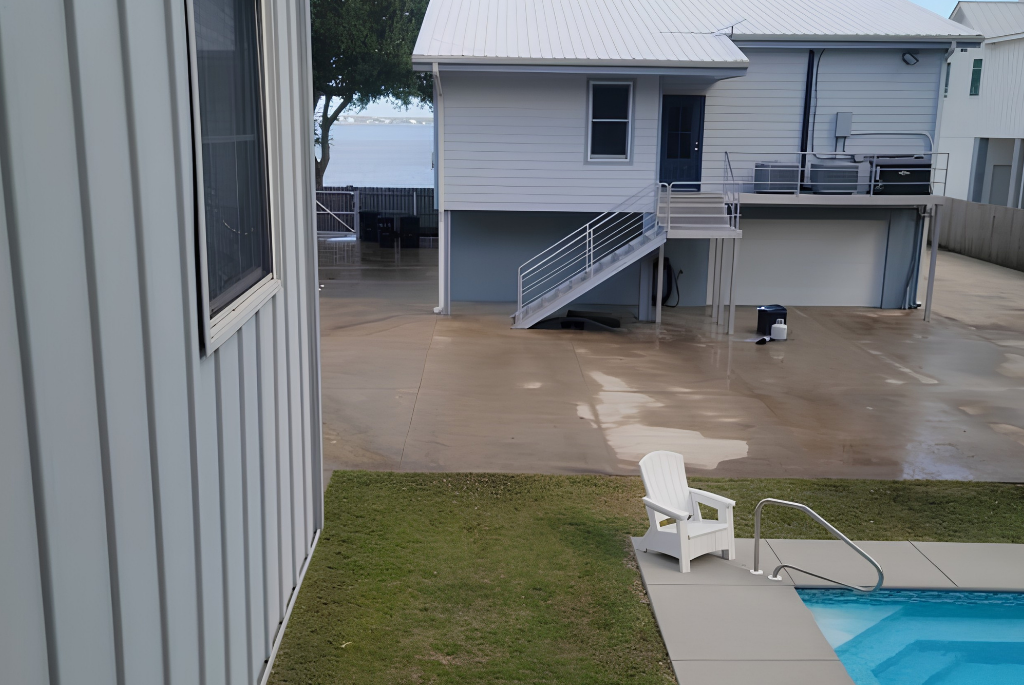
Gulf Coast exterior surfaces are exposed to persistent moisture, airborne salt, pollen, algae, and mildew throughout the year. These conditions accelerate surface contamination, increase maintenance requirements, and contribute to material deterioration over time.
Most Gulf Coast properties require exterior cleaning every 1 to 3 years, with siding, roofs, and concrete surfaces requiring the shortest cleaning intervals.
Environmental Conditions That Affect Cleaning Intervals
Exterior contaminants accumulate at different rates depending on the property’s environment. Tree coverage increases shade and moisture retention. Coastal exposure introduces airborne salt and additional humidity. Areas with limited airflow remain damp longer, creating favorable conditions for algae and mildew growth.
As contamination accumulates, surfaces become more difficult to clean and may require more aggressive restoration methods. Routine maintenance helps prevent that buildup from becoming established.
The Environmental Protection Agency identifies moisture control as a key factor in preventing mold growth and protecting building materials from deterioration.
Recommended Cleaning Intervals
The following schedule provides a general maintenance framework for most Gulf Coast properties:
- House siding: Every 12 to 18 months
- Roofs: Every 2 to 3 years
- Driveways and sidewalks: Every 1 to 2 years
- Decks and patios: Every 1 to 2 years
- Fences: Every 2 to 3 years
- Gutters, soffits, and fascia: Annually
These intervals should be adjusted based on environmental exposure, surrounding vegetation, and the rate of surface contamination.
House Siding
Siding remains in constant contact with moisture, pollen, dirt, and biological growth. North-facing elevations and shaded areas generally experience faster algae and mildew development because surfaces remain damp for longer periods.
For most Gulf Coast properties, professional coastal house washing every 12 to 18 months provides adequate maintenance. Soft washing removes algae, mildew, bacteria, and organic contaminants without exposing siding materials to unnecessary pressure.
Roofs
Roof surfaces collect organic debris, moisture, and airborne contaminants throughout the year. In coastal climates, algae growth commonly appears as dark streaking across asphalt shingles and other roofing materials.
Left untreated, this buildup reduces the roof’s ability to shed moisture efficiently and increases the likelihood of long-term staining. A cleaning interval of two to three years is sufficient for most Gulf Coast roof systems.
Driveways and Sidewalks
Concrete surfaces accumulate dirt, tire residue, mildew, algae, and environmental staining through daily exposure to weather and traffic.
A cleaning interval of one to two years is appropriate for most driveways and sidewalks. Areas with persistent shade, poor drainage, or elevated moisture levels may require annual service to maintain appearance and surface safety.
Power washing is typically used to remove embedded contaminants and restore the appearance of concrete, walkways, and other hard surfaces.
Decks, Patios, and Fences
Outdoor structures experience continuous exposure to moisture, pollen, dirt, and biological growth. Over time, contaminants become embedded within porous materials and contribute to discoloration and surface deterioration.
As buildup increases, surfaces become harder to restore, and protective treatments such as staining or sealing become less effective. Most decks and patios require cleaning every one to two years.
Fence cleaning is typically required every two to three years, although environmental conditions may justify shorter intervals.
Indicators That Cleaning Is Needed
Maintenance schedules provide a useful baseline, but visible surface conditions should also be evaluated during routine property inspections.
Common indicators include:
- Algae or mildew growth
- Black roof streaking
- Surface discoloration
- Pollen accumulation
- Slippery concrete surfaces
- Organic staining on fences or siding
- Darkened gutters, soffits, or fascia
These conditions indicate active contamination and surface buildup that should be addressed before deterioration progresses further.
Maintaining Exterior Surfaces in Coastal Environments
Gulf Coast environmental conditions accelerate the accumulation of moisture, algae, mildew, and other contaminants across exterior surfaces. Without routine maintenance, that buildup contributes to staining, material deterioration, and shorter service life.
Cleaning schedules should be based on surface type, environmental exposure, and contamination levels. Consistent maintenance helps control buildup and preserve the condition of exterior materials over time.