Salt Air & Sun Exposure: How Coastal Weather Damages Home Exteriors
Homes along the Mississippi Gulf Coast deal with challenges that inland properties rarely face. Salt stays suspended in the air. The sun is shining intensely year-round. Moisture never fully goes away. Over time, those conditions take a visible toll, often showing up on siding, roofs, and concrete much sooner than homeowners expect.
Salt air and sun exposure damage home exteriors by breaking down protective coatings, trapping moisture against surfaces, and accelerating fading, cracking, mold growth, and long-term material deterioration.
That is the reality Coastal House Washing works with every day. As a locally owned company, our main focus is on more than short-term appearance. The goal is to help coastal homes stand up to environmental stress that slowly wears down exterior surfaces.
What surprises many homeowners is how quickly that wear begins. Salt air and constant sun exposure do more than leave stains behind. They weaken protective layers, which allows buildup to cling more tightly and makes damage harder to reverse once it starts.
Understanding how coastal weather affects your home helps explain why professional house washing plays such an important role in long-term maintenance.
Why Coastal Homes Deteriorate Faster Than Expected
Coastal weather creates constant exposure that often gets underestimated. Several factors work together at the same time:
- Salt air clings to exterior surfaces and traps moisture
- Direct sunlight breaks down paint, vinyl, and protective coatings
- High humidity encourages mold, mildew, and algae growth
Unlike ordinary dirt, these elements do not wash away with rain. They settle in, bond to surfaces, and compound over time. That is why coastal homes often look weathered earlier, even when owners stay on top of upkeep.
The Hidden Impact of Salt Air
Salt particles may be small, but their effect builds steadily. As salt accumulates, paint and sealants begin to degrade. Chalky residue forms on siding, and organic growth spreads more easily across weakened surfaces. Over time, the risk of surface erosion increases.
Once salt works its way into exterior materials, simple rinsing no longer solves the problem. It requires proper removal and cleaning methods that are designed specifically for coastal conditions.
How Sun Exposure Makes Exterior Issues Worse
The Gulf Coast sun accelerates deterioration across nearly every exterior surface. High UV exposure fades color, dries out wood and composite materials and creates fine cracks that trap grime and moisture.
As protective layers wear down, stains return more quickly and organic growth finds new places to take hold. That is often when homeowners notice something frustrating. No matter how often they clean, the exterior never seems to stay clean for long.
Mold, Mildew, and Algae in Coastal Environments
Warm temperatures combined with constant moisture create ideal conditions for organic growth on exterior building materials. Common signs include:
- Green algae are spreading across the siding
- Black streaks forming on roofs
- Mildew buildup in shaded or poorly ventilated areas
These problems are not limited to appearance. If it is left untreated, growth holds moisture against surfaces, accelerates material decay, and shortens the lifespan of roofing and siding. Addressing it properly means stopping regrowth at the source.
Why DIY Pressure Washing Often Falls Short
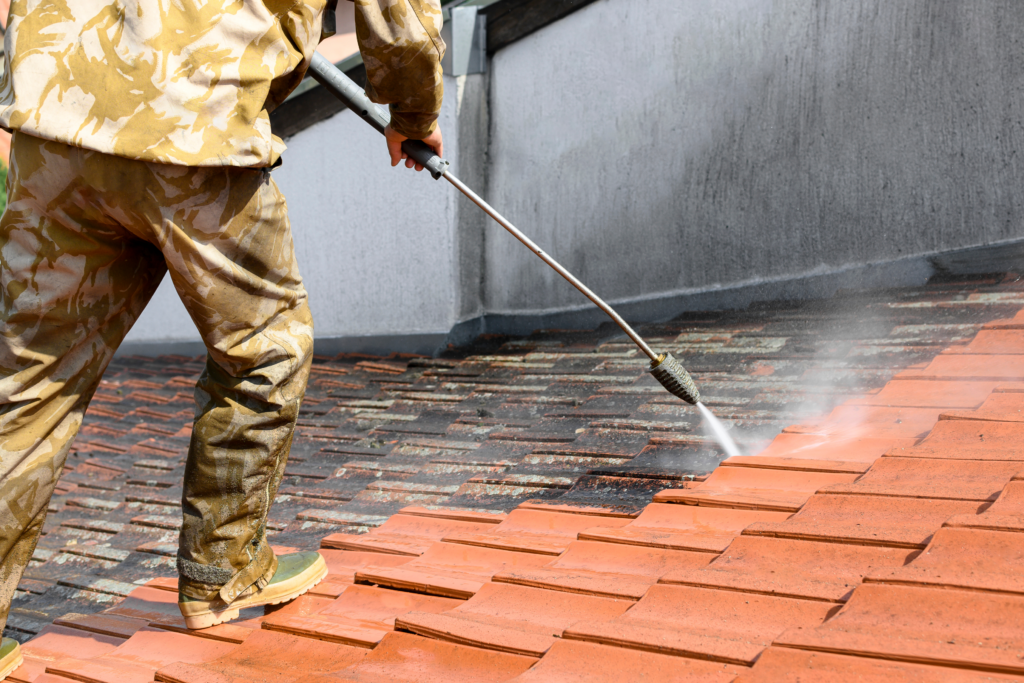
Many homeowners start with store-bought pressure washers, but high pressure frequently causes unintended damage. It can force water behind siding, strip away protective coatings, and spread spores instead of removing them.
Soft washing has become the preferred approach for coastal homes because it removes buildup without stressing the materials underneath. This is where most DIY equipment simply cannot deliver the same results.
When Coastal Homes Should Be Professionally Washed
Homes on or near the coast benefit from regular professional cleaning. General guidelines include:
- At least once per year for most coastal properties
- Twice per year for homes near open water or heavy shade
Clear warning signs will show up first. The stains return quickly, discoloration stays, algae or mildew becomes clearly visible, and surfaces begin to fade or look even chalkier. Delaying service often leads to higher repair and replacement costs later.
What Professional House Washing Provides
Professional house washing goes beyond appearance. It safely removes salt residue, addresses mold and algae at the source, improves curb appeal, and helps protect siding, roofs, and concrete over time. For coastal homeowners, soft washing offers short-term appeal and long-term protection.
Why Coastal Homeowners Choose Coastal House Washing
Coastal homes don’t respond to cleaning the way inland homes do. Weather exposure is tougher, buildup sets in faster, and shortcuts rarely hold up. That’s why Coastal House Washing takes a different approach to exterior cleaning.
Every part of the exterior is handled with the method that fits the surface. Soft washing is used where materials need a lighter touch, while professional power washing is applied to concrete and hardscapes that require deeper cleaning. The focus stays on work that’s done safely and thoroughly, and holds up over time.
Experience makes the difference. Knowing how salt air settles, where growth shows up first, and which treatments actually last on Mississippi Gulf Coast homes leads to results that hold longer. Choosing a house washing service means working with a team that understands coastal damage and knows how to slow it down before it turns into a larger issue.